
Dental emergencies can happen suddenly. A tooth may break while eating, severe pain may develop overnight, or an accident may knock out a tooth.
When this happens, it can be difficult to know whether you should wait for a regular appointment, contact an emergency dentist in Edmonton, or seek immediate medical attention.
Knowing what to do can help protect your teeth, reduce the risk of further damage, and get you the right care as quickly as possible.
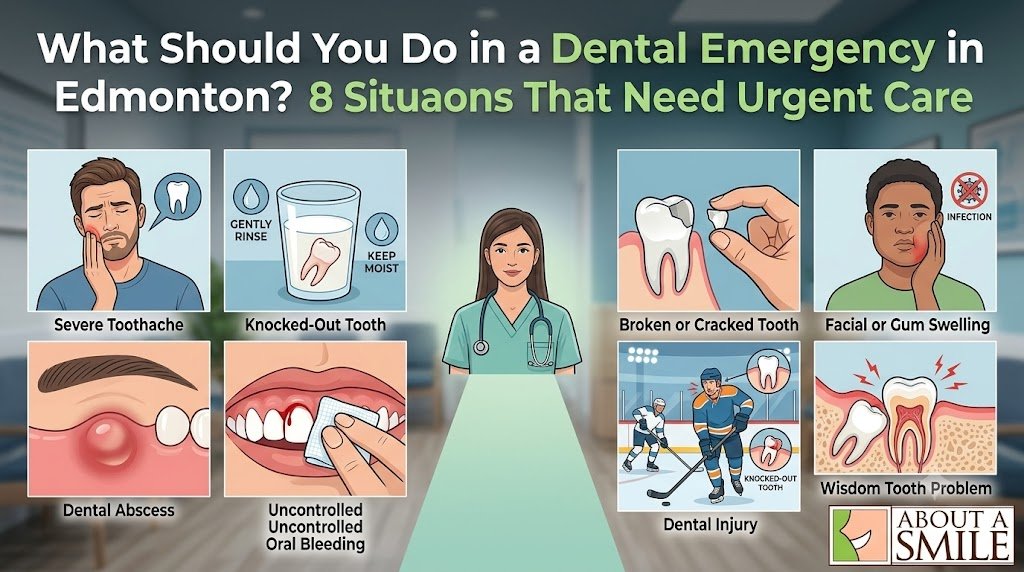
This guide covers 8 common dental emergencies, what you can do while waiting for professional care, and when a dental problem requires emergency medical attention.
Important: If a dental problem involves difficulty breathing or swallowing, uncontrolled bleeding, severe facial trauma, or rapidly increasing swelling, seek emergency medical care immediately.
What Is Considered a Dental Emergency?
A dental emergency is generally a problem involving the teeth, gums, mouth, or jaw that requires prompt professional attention because of significant pain, injury, bleeding, infection, or the risk of further damage.
Common dental emergencies include:
- Severe or persistent toothache
- Knocked-out teeth
- Broken or cracked teeth
- Significant swelling
- Dental abscesses or suspected infections
- Uncontrolled oral bleeding
- Dental injuries
- Severe pain from a damaged or infected tooth
Not every dental problem requires emergency treatment. For example, a small chip without pain may be less urgent than a knocked-out tooth or rapidly increasing facial swelling.
If you are unsure whether your situation is urgent, contacting a dental office and describing your symptoms can help determine what type of care you need.
For more information, visit Emergency Dentist Edmonton.
8 Dental Emergencies That May Need Urgent Care
1. Severe or Persistent Toothache
A sudden or severe toothache should not be ignored, particularly when the pain is persistent, worsening, or interfering with eating or sleeping.
Tooth pain may be associated with:
- Tooth decay
- A cracked or damaged tooth
- Inflammation of the dental pulp
- Infection
- Gum problems
- An impacted or problematic tooth
Temporary pain relief may help you manage discomfort, but it does not address the underlying cause.
If you are experiencing significant or persistent tooth pain, Toothache Treatment Edmonton can provide information about professional treatment options.
What Can You Do for a Toothache Until You See a Dentist?
While arranging dental care:
- Rinse your mouth gently with warm water.
- Carefully clean between the teeth if food may be trapped.
- Avoid chewing on the painful side.
- Follow the label directions for any over-the-counter pain medication you normally can take.
- Do not place aspirin directly against the tooth or gums.
- Contact a dentist if the pain is severe, persistent, or worsening.
If tooth pain occurs with significant swelling, fever, or difficulty swallowing, the situation may require more urgent attention.
2. A Knocked-Out Permanent Tooth
A knocked-out permanent tooth is a time-sensitive dental emergency.
If a permanent tooth has been completely knocked out:
- Find the tooth if possible.
- Handle it by the crown—the part normally visible in the mouth—not the root.
- If it is dirty, gently rinse it without scrubbing.
- If you can safely do so, follow professional guidance about repositioning the tooth.
- If it cannot be repositioned, keep it moist and seek dental care immediately.
- Contact a dentist as soon as possible.
Do not scrub the root or attempt to remove tissue attached to it.
A knocked-out baby tooth should not be placed back into the socket without professional guidance.
Because the appropriate response can depend on whether the tooth is permanent or primary, contact a dentist promptly for instructions.
3. A Broken, Cracked, or Chipped Tooth
A tooth can break or crack because of an accident, sports injury, biting something hard, tooth decay, or normal wear.
A damaged tooth may cause:
- Pain
- Sensitivity
- Sharp edges
- Difficulty chewing
- Bleeding
- Visible damage
If a piece of the tooth has broken off, save it if possible and bring it to the dental appointment.
Gently rinse your mouth and avoid chewing on the damaged side until the tooth has been evaluated.
For information about treatment for damaged teeth, see Broken Tooth Repair Edmonton.
Treatment may vary depending on how much tooth structure has been damaged.
4. Facial or Gum Swelling
Swelling around a tooth, gum, cheek, or jaw can sometimes indicate an infection or another dental problem that needs prompt attention.
Contact a dentist if you develop:
- Increasing gum swelling
- Facial swelling
- Jaw swelling
- Significant tooth pain
- A bad taste in your mouth
- Fever or feeling unwell
- Difficulty opening your mouth
A dental infection should not be ignored simply because the pain temporarily improves.
If swelling is rapidly increasing or begins to affect breathing or swallowing, seek emergency medical care immediately.
5. A Dental Abscess or Suspected Infection
A dental abscess is a collection of infection-related material that can develop around a tooth or in surrounding tissues.
Possible signs include:
- Severe tooth pain
- Swelling
- Gum tenderness
- A pimple-like bump on the gum
- Bad taste or drainage
- Fever
- Facial swelling
An abscess requires professional dental assessment.
Depending on the source of the infection, treatment may involve addressing the tooth itself, draining infection when appropriate, root canal treatment, or extraction.
If the tooth can potentially be preserved, Root Canal Treatment Edmonton may be one treatment option.
Do not attempt to drain an abscess yourself.
6. Bleeding That Does Not Stop
Minor bleeding can sometimes occur after an injury or dental procedure. However, bleeding that is heavy or does not stop with appropriate pressure requires prompt attention.
If your mouth is bleeding:
- Use clean gauze or a clean cloth to apply gentle, steady pressure.
- Avoid repeatedly removing the gauze to check the area.
- Contact a dental professional for guidance.
- Seek emergency medical care if bleeding is severe or uncontrolled.
Significant bleeding combined with a serious facial injury should be treated as a medical emergency.
7. A Dental Injury From an Accident or Sports
Falls, vehicle accidents, sports injuries, and other impacts can damage teeth and surrounding tissues.
An injury may result in:
- A chipped tooth
- A fractured tooth
- A loose tooth
- A displaced tooth
- A knocked-out tooth
- Cuts to the lips, cheeks, or gums
- Jaw pain
Even when the visible damage seems minor, a dental examination may be useful because some injuries are not obvious immediately.
If your child experiences a dental injury, prompt evaluation is particularly important when a permanent tooth has been affected.
8. A Severe Dental Problem Involving a Wisdom Tooth
Wisdom teeth can sometimes cause pain, swelling, infection, or difficulty opening the mouth.
Symptoms may include:
- Pain at the back of the mouth
- Swollen gums
- Jaw discomfort
- Difficulty chewing
- Bad taste or bad breath
- Swelling around a partially erupted tooth
Not every wisdom tooth problem is an emergency, but significant pain, swelling, infection, or difficulty opening your mouth should be assessed.
If removal is recommended, learn more about Wisdom Teeth Removal Edmonton.
What Should You Do First During a Dental Emergency?
When a dental emergency happens, try to stay calm and focus on protecting the affected area.
Step 1: Check for Serious Symptoms
Look for:
- Heavy bleeding
- Facial swelling
- A knocked-out tooth
- A broken or displaced tooth
- Severe pain
- Difficulty breathing or swallowing
- A serious facial or jaw injury
Step 2: Protect the Area
Avoid chewing on the affected side and avoid unnecessary pressure on an injured tooth.
Step 3: Preserve Any Tooth Fragment
If a piece of tooth has broken off, keep it and bring it with you for the dental assessment.
Step 4: Contact a Dentist
Explain what happened, when it happened, and what symptoms you are experiencing.
Useful information includes:
- How the injury occurred
- How long ago it happened
- Level of pain
- Whether swelling is present
- Whether the tooth is loose, broken, or missing
- Whether there is bleeding
- Whether you have fever or other symptoms
This can help the dental team understand how urgently you need to be assessed.
When Should You Go to the Emergency Room Instead of a Dentist?
Some dental problems need urgent dental care, while others require emergency medical treatment.
Go to an emergency department or call emergency services when you have a potentially life-threatening problem such as:
- Difficulty breathing
- Difficulty swallowing
- Severe or rapidly increasing facial or neck swelling
- Uncontrolled bleeding
- Major facial trauma
- A suspected serious jaw injury
- Loss of consciousness or another significant injury
A dental clinic can treat many urgent dental problems, but serious medical symptoms require immediate medical attention.
Can a Severe Toothache Go Away on Its Own?
Sometimes dental pain may temporarily decrease, but that does not necessarily mean the underlying problem has resolved.
For example, pain caused by decay, inflammation, infection, or damage can change over time.
A tooth that stops hurting after severe pain may still require professional assessment.
If your toothache is persistent or keeps returning, it is better to have the cause evaluated rather than repeatedly managing the symptoms at home.
What Emergency Dental Treatments Might Be Needed?
The treatment depends on the cause and severity of the emergency.
Possible treatments may include:
- Emergency examination
- Dental X-rays when clinically appropriate
- Filling or restoration
- Broken tooth repair
- Root canal treatment
- Tooth extraction
- Treatment for infection
- Management of dental trauma
- Follow-up restorative treatment
The goal is first to assess the problem, control pain or infection when necessary, and protect the tooth and surrounding tissues.
If a tooth cannot be safely restored, an extraction may sometimes be recommended. Learn more about Tooth Extractions Edmonton.
How Can You Reduce the Risk of Dental Emergencies?
Not every dental emergency can be prevented, but regular dental care can reduce the risk of some problems.
Helpful habits include:
- Brush your teeth regularly with fluoride toothpaste.
- Clean between your teeth.
- Attend regular dental examinations.
- Have dental problems treated before they worsen.
- Avoid chewing extremely hard objects.
- Wear a properly fitted mouthguard during appropriate sports.
- Do not use your teeth to open packages.
- Follow your dentist’s recommendations for ongoing care.
Regular preventive care can help identify cavities, weakened teeth, gum problems, and other concerns before they develop into urgent situations.
For family-focused preventive care, you can also read How Family Dentistry Prevents Cavities & Gum Disease.
Should You Wait Until Your Regular Dental Appointment?
It depends on the symptoms.
A minor issue without pain or swelling may sometimes be suitable for a regular appointment. However, you should contact a dentist sooner when you have:
- Severe or worsening pain
- Facial or gum swelling
- A knocked-out permanent tooth
- Significant tooth damage
- Persistent bleeding
- Signs of infection
- A dental injury
If you are uncertain, it is better to contact a dental office and explain your symptoms rather than assuming the problem can safely wait.
Frequently Asked Questions About Emergency Dentistry in Edmonton
What is considered a dental emergency in Edmonton?
Severe tooth pain, a knocked-out permanent tooth, significant tooth damage, facial or gum swelling, dental infection, uncontrolled oral bleeding, and serious dental injuries may require urgent dental care.
How quickly should I see an emergency dentist for a knocked-out tooth?
A knocked-out permanent tooth should be treated as soon as possible. Time can affect the treatment options available, so contact a dentist immediately and follow their instructions while arranging care.
What should I do if I break a tooth?
Rinse your mouth gently, save any broken pieces if possible, avoid chewing on the affected side, and contact a dentist for an assessment. Broken Tooth Repair Edmonton provides more information about treatment options.
Is a severe toothache a dental emergency?
A severe, persistent, or worsening toothache should be assessed promptly. It can be associated with decay, infection, inflammation, or damage to a tooth.
Can a dental abscess go away without treatment?
A dental abscess should not be left untreated. Even if pain or swelling changes temporarily, the underlying infection may remain and can potentially become more serious.
Should I go to the hospital for a dental emergency?
Go to emergency medical care if you have difficulty breathing or swallowing, uncontrolled bleeding, severe facial trauma, or rapidly increasing swelling, especially around the face or neck. For many tooth-specific problems, an emergency dentist can provide the appropriate dental assessment and treatment.
What should I do if my child has a dental emergency?
Stay calm, protect the injured area, and contact a dentist promptly. A knocked-out permanent tooth, severe pain, significant swelling, or a serious dental injury should be assessed quickly.
Can an emergency dentist save a badly damaged tooth?
Sometimes. The possibility of saving a tooth depends on the type and extent of damage, the condition of the tooth, and the surrounding tissues. Treatments such as restoration or root canal therapy may sometimes preserve a damaged tooth.
What if I have dental pain but no swelling?
Pain can still indicate an underlying dental problem even without visible swelling. Persistent or severe pain should be assessed by a dentist to determine its cause.
Can a broken filling or crown be a dental emergency?
A lost filling or crown is not always a medical emergency, but it can expose or weaken the tooth and may cause sensitivity or pain. Contact a dentist for advice, particularly if the tooth is painful or damaged.
Need an Emergency Dentist in Edmonton?
A dental emergency can be stressful, but knowing what to do can help you respond quickly and appropriately.
Whether you are dealing with severe tooth pain, a broken tooth, swelling, a dental injury, or another urgent concern, professional assessment can help determine the cause and the appropriate treatment.
If you believe you need urgent dental care, contact About A Smile for emergency dental care in Edmonton.
You can also book an appointment with About A Smile to discuss your dental concern.
About A Smile
Edmonton, AB T6M 2M6
780-444-1118
aboutasmile183@gmail.com
When dental pain or injury cannot wait, getting the right care promptly can help protect your oral health and give you peace of mind.
