
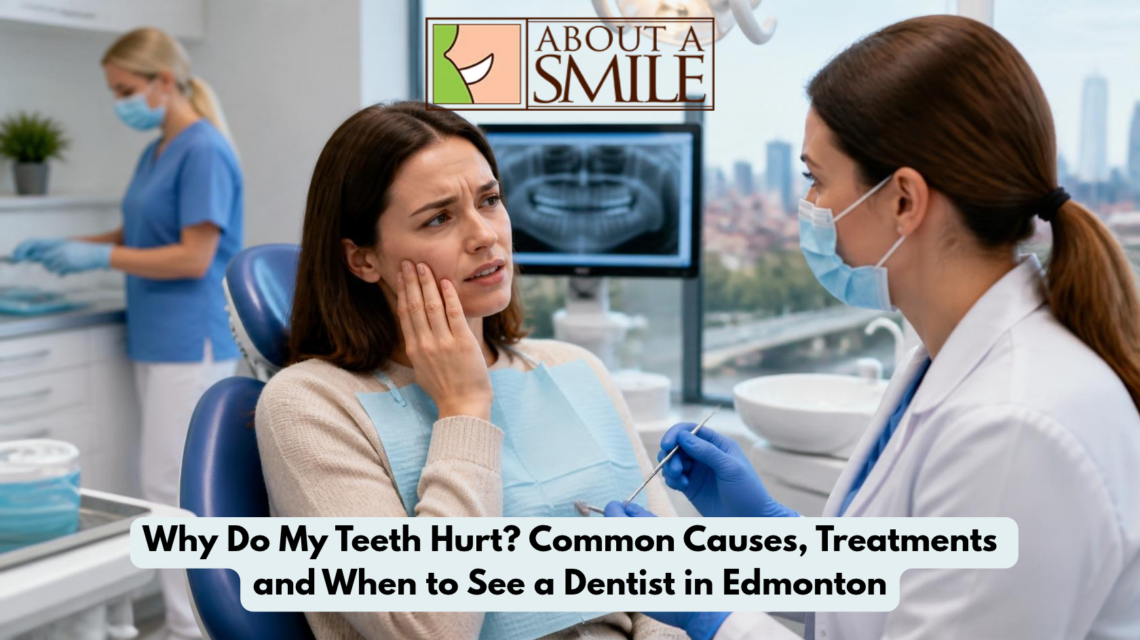
Tooth pain can make it difficult to eat, sleep, concentrate, or enjoy your daily routine. Sometimes, the discomfort is mild and happens only when you drink something cold. In other cases, the pain is severe, persistent, or accompanied by swelling.
If you are wondering, “Why do my teeth hurt?”, the answer depends on the cause. Tooth decay, gum disease, a cracked tooth, dental infection, and sensitivity can all lead to discomfort. Identifying the cause early can help you understand which treatment may be appropriate.
If you experience persistent or worsening tooth pain, a dental examination can help identify the problem. About A Smile provides dental care in Edmonton for patients who need help understanding tooth pain, damaged teeth, and other oral health concerns.
This guide explains common causes of tooth pain, possible treatments, warning signs of a dental emergency, and when to contact a dentist in Edmonton.
Why Do My Teeth Hurt?
Teeth can hurt when the enamel, inner tooth tissue, gums, or surrounding structures become damaged, inflamed, or irritated. The location, severity, and timing of the pain can provide useful clues, but symptoms alone cannot confirm the exact cause.
Common reasons for tooth pain include:
- Tooth decay or cavities
- Tooth sensitivity to hot, cold, or sweet foods
- Cracked, chipped, or broken teeth
- Gum inflammation or gum disease
- Dental infection or an abscess
- Teeth grinding or clenching
- Problems involving wisdom teeth
- Recent dental treatment or irritation
For example, sharp pain when drinking cold water may be associated with sensitivity. Pain when biting may indicate a damaged tooth or another dental problem. Persistent throbbing pain may require prompt assessment for inflammation or infection.
Do not ignore severe, recurring, or unexplained tooth pain. A dentist can examine your teeth and gums and recommend treatment based on the underlying cause.
7 Common Causes of Tooth Pain
1. Tooth Decay and Cavities
Tooth decay develops when acids produced by bacteria gradually damage the tooth structure. Early decay may not cause noticeable symptoms. As the damage progresses, you may experience sensitivity, discomfort when eating, or a persistent toothache.
Possible signs include:
- Sensitivity to sweets or cold drinks
- Pain when chewing
- Visible holes or dark spots on a tooth
- Food getting trapped in a particular area
- Increasing discomfort over time
The treatment depends on how far the decay has progressed. A dentist may recommend a filling, a crown, root canal treatment, or another procedure depending on the condition of the tooth.
Early assessment can help prevent further damage. If you suspect a cavity, arrange a dental examination rather than waiting for the pain to become severe.
Learn more about restorative dentistry in Edmonton.
2. Tooth Sensitivity to Hot and Cold
Do your teeth hurt when you drink cold water, eat ice cream, or sip hot tea? You may have tooth sensitivity.
Sensitivity can occur when enamel wears down, gums recede, or the underlying dentin becomes exposed. Cavities, cracked teeth, and other dental conditions can also cause similar symptoms.
You may notice a brief, sharp sensation that disappears after the trigger is removed. However, lingering pain or sensitivity in one particular tooth may need further investigation.
To help manage sensitivity:
- Use a soft-bristled toothbrush.
- Brush gently with fluoride toothpaste.
- Avoid aggressive brushing.
- Limit frequent exposure to acidic foods and drinks.
- Ask your dentist whether desensitizing toothpaste may help.
These steps may reduce discomfort, but they do not replace an examination when symptoms persist.
3. Cracked, Chipped, or Broken Teeth
A tooth may crack or break after biting something hard, sustaining an injury, or developing weakness from decay or an existing restoration.
Sometimes, a crack is difficult to see. You may feel pain only when chewing or when releasing your bite. Other signs include sensitivity, a sharp edge, or discomfort that comes and goes.
Avoid chewing on the affected side until you receive dental advice. If a piece of the tooth breaks off, keep it if possible and contact a dentist.
Treatment depends on the size and location of the damage. Options may include bonding, a filling, a crown, root canal treatment, or extraction if the tooth cannot be restored.
For more information, explore broken tooth repair in Edmonton.
If the pain is severe or the tooth has been damaged by an accident, contact an emergency dentist in Edmonton promptly.
4. Gum Disease and Gum Inflammation
Tooth discomfort does not always begin inside the tooth. Inflamed or infected gums can also cause tenderness, bleeding, swelling, and discomfort around the teeth.
Common warning signs include:
- Gums that bleed during brushing or flossing
- Red or swollen gums
- Persistent bad breath
- Gum recession
- Tenderness when chewing
- Changes in how your teeth fit together
Early gum inflammation may improve with professional care and better oral hygiene. More advanced gum disease can damage the tissues and bone supporting your teeth.
Your dentist can assess your gum health and recommend appropriate treatment. Learn more about gum disease treatment in Edmonton.
5. Dental Infection or Tooth Abscess
A dental abscess is a collection of pus caused by an infection. It may develop when bacteria reach the inner tissues of a tooth or the surrounding gum area.
Symptoms can include severe throbbing pain, swelling, tenderness, a bad taste in the mouth, fever, or discomfort that spreads toward the jaw.
A suspected dental abscess needs urgent professional assessment. The infection will not reliably resolve through home remedies alone.
Depending on the cause, treatment may involve draining the infection, root canal treatment, extraction, or other appropriate care. Antibiotics may be needed in certain circumstances, but they do not replace necessary dental treatment.
If you have facial or neck swelling with difficulty breathing or swallowing, seek emergency medical care immediately.
For persistent tooth pain or suspected infection, contact toothache treatment services in Edmonton or an emergency dentist in Edmonton.
6. Wisdom Teeth Problems
Wisdom teeth are the last molars to emerge. When there is not enough space for them to come through properly, they may become impacted or cause discomfort and inflammation around the gums.
Symptoms may include pain at the back of the mouth, swollen gums, difficulty opening your mouth, or discomfort when chewing.
Not every wisdom tooth needs to be removed. A dentist can assess its position, examine the surrounding tissues, and determine whether monitoring or treatment is appropriate.
Explore wisdom teeth removal in Edmonton to learn more about assessment and treatment options.
7. Teeth Grinding or Clenching
Grinding or clenching your teeth can place repeated pressure on the teeth and jaw muscles. Some people do this during sleep without realizing it.
Possible symptoms include morning jaw soreness, headaches, tooth sensitivity, worn tooth surfaces, or pain when biting.
Your dentist can examine your teeth for signs of wear and help determine whether grinding may be contributing to the discomfort. Depending on the cause, treatment may include strategies to reduce clenching, a custom night guard, or other appropriate care.
Do not assume that jaw or tooth pain is caused by grinding without an assessment, especially if the pain is new or severe.
What Does Tooth Pain in Different Situations Mean?
The way your tooth hurts may help your dentist narrow down possible causes.
Pain when drinking cold water: This may be related to sensitivity, enamel wear, gum recession, or tooth decay.
Pain when eating sweets: This can occur with exposed dentin or cavities.
Pain when biting down: A cracked tooth, damaged restoration, or inflammation around the tooth may be responsible.
Throbbing or persistent tooth pain: This may indicate significant inflammation or infection and should be assessed promptly.
Pain at the back of your mouth: Wisdom teeth problems or gum inflammation may be possible causes.
Tooth pain with swollen gums: This can occur with gum disease or a dental infection.
These patterns are clues, not diagnoses. A dental examination may include checking your teeth and gums and, when appropriate, taking dental X-rays.
How Can a Dentist Treat Tooth Pain?
The best treatment for tooth pain depends on what is causing it. Pain relief alone may temporarily reduce symptoms without addressing the underlying problem.
Dental Fillings and Restorative Treatment
A filling may be appropriate when a cavity has damaged part of the tooth but enough healthy structure remains. Larger areas of damage may require a crown or another restorative procedure.
Learn more about restorative dentistry in Edmonton.
Root Canal Treatment
When the inner pulp of a tooth becomes inflamed or infected, root canal treatment may help preserve the natural tooth in suitable cases.
The dentist removes the affected tissue, cleans the inside of the tooth, and seals it. Further restoration may be required to protect the tooth.
Explore root canal treatment in Edmonton.
Tooth Extraction
Sometimes a tooth is too damaged to be restored, or removal is recommended for another clinical reason. A dentist will assess whether the tooth can be saved and explain the benefits and risks of the available options.
Find out more about tooth extractions in Edmonton.
Professional Teeth Cleaning
If your discomfort is associated with plaque buildup or gum inflammation, professional cleaning may be part of your care plan. Cleaning alone, however, will not treat every cause of tooth pain, particularly cavities, cracked teeth, or dental infections.
Read about teeth cleaning in Edmonton.
What Can You Do at Home Until Your Dental Appointment?
Home care may help you stay more comfortable while arranging professional assessment. However, it cannot repair a cracked tooth, remove decay, or reliably treat a dental infection.
Consider these temporary measures:
- Rinse gently with warm salt water if you can spit it out safely.
- Brush carefully with a soft-bristled toothbrush.
- Avoid very hot, cold, sweet, or hard foods if they trigger pain.
- Chew on the opposite side of your mouth.
- Apply a cold compress to the outside of your cheek if there is swelling.
- Ask a pharmacist or healthcare professional about suitable over-the-counter pain relief and follow the product directions.
Do not place aspirin directly on your tooth or gums, as it can damage the tissue. Avoid putting household substances or unprescribed remedies into a damaged tooth.
If you have persistent pain, worsening symptoms, fever, or swelling, do not rely on home care alone.
When Should You See an Emergency Dentist in Edmonton?
Not every toothache is an emergency, but certain symptoms require urgent attention.
Contact a dentist promptly if you have:
- Severe or persistent tooth pain
- A broken or badly cracked tooth
- A knocked-out permanent tooth
- Swelling around your gums, jaw, or face
- Pus or a suspected dental abscess
- Fever alongside dental pain
- Bleeding that does not stop after a dental injury
A knocked-out permanent tooth requires immediate dental attention because treatment is time-sensitive. Handle it by the crown rather than the root, and follow the dentist’s instructions while seeking care.
If swelling affects your breathing or swallowing, or spreads rapidly through your face or neck, seek emergency medical care rather than waiting for a dental appointment.
If you are unsure how urgently you need care, call a dental clinic, describe your symptoms, and ask for guidance.
About A Smile offers dental services in Edmonton. You can learn more about emergency dental care and the available appointment process.
How Can You Prevent Tooth Pain in the Future?
Good daily habits and regular dental visits can help reduce the risk of many common dental problems.
Brush and Floss Consistently
Brush twice daily with fluoride toothpaste and clean between your teeth every day. Use gentle brushing techniques to avoid damaging your gums.
Limit Frequent Sugary and Acidic Foods
Frequent exposure to sugar can increase the risk of cavities. Acidic foods and drinks may contribute to enamel erosion, particularly when consumed often.
Attend Regular Dental Checkups
Your dentist can check for early signs of decay, gum disease, worn enamel, and other concerns. The recommended visit schedule depends on your individual oral health and risk factors.
Protect Your Teeth From Injury
Avoid chewing ice or using your teeth to open packaging. If you participate in contact sports, ask about an appropriate mouthguard.
Address Problems Early
Do not wait for mild sensitivity, bleeding gums, or a small chip to become severe. Early assessment can help identify the cause and prevent further damage where possible.
If you need ongoing preventive care, explore family dentistry in Edmonton.
Frequently Asked Questions About Tooth Pain
1. Why do my teeth hurt even when I am not eating?
Tooth pain at rest can be associated with decay, inflammation inside the tooth, infection, a cracked tooth, or other dental conditions. Persistent or worsening pain should be assessed by a dentist.
2. Why does my tooth hurt when I drink cold water?
Cold sensitivity may result from enamel wear, exposed dentin, gum recession, cavities, or a damaged tooth. If the pain lingers after the cold stimulus is removed, arrange a dental examination.
3. Can a toothache go away on its own?
Some temporary irritation may settle, but pain that disappears does not always mean the underlying problem has healed. Cavities and dental infections may continue to progress without treatment.
4. How do I know if my toothache is a dental emergency?
Severe pain, facial swelling, fever with dental symptoms, a dental injury, or a suspected abscess requires prompt assessment. Difficulty breathing or swallowing requires emergency medical care.
5. What is the fastest way to relieve tooth pain?
The appropriate approach depends on the cause. Suitable over-the-counter pain relief, used according to its directions, may help temporarily. A dentist can identify the underlying problem and recommend definitive treatment.
6. Can a cavity cause severe tooth pain?
Yes. A cavity can cause sensitivity and pain, particularly as decay progresses toward the inner tooth tissues. Severe pain may indicate more advanced damage or inflammation and should be assessed promptly.
7. Does a toothache always mean I need a root canal?
No. Treatment depends on the diagnosis. A filling, crown, treatment for gum problems, or another procedure may be appropriate. Root canal treatment is considered when the tooth’s inner pulp is affected and the tooth can be treated successfully.
8. Why does my tooth hurt when I bite down?
Pain during biting may be associated with a crack, decay, a damaged filling, or inflammation around the tooth. Avoid chewing on that tooth and arrange an assessment.
9. Can gum disease cause tooth pain?
Gum disease can cause gum tenderness, swelling, bleeding, and discomfort. Advanced disease can also affect the tissues and bone supporting the teeth. A dental examination can help determine the cause.
10. How can I book a dental appointment for tooth pain in Edmonton?
Contact About A Smile at 780-444-1118 or email aboutasmile183@gmail.com. You can also visit the clinic’s appointment page to ask about availability and explain your symptoms.
Get Help for Tooth Pain at About A Smile in Edmonton
Tooth pain can have several causes, and the right treatment starts with identifying the problem. Whether you have sensitivity, a suspected cavity, a broken tooth, or persistent discomfort, a dental professional can assess your symptoms and explain the next steps.
Contact About A Smile to discuss your dental concerns and ask about appointment availability.
About A Smile
Edmonton, AB T6M 2M6
Phone: 780-444-1118
Email: aboutasmile183@gmail.com
