

A severe toothache can stop you from eating, sleeping, and focusing on anything else. If you are dealing with an emergency toothache in Edmonton, you probably want fast, clear answers. This guide explains what to do right now, what to avoid, and when to call a dentist. It also covers the common causes and the treatments a dentist may recommend. Please remember that this article is general information and does not replace a dental exam.
Quick Answer: What Should You Do for a Severe Toothache?
If you have a severe toothache, take these steps first:
- Rinse gently with warm salt water to clean the area
- Floss carefully to remove any trapped food
- Use a cold compress on the outside of your cheek
- Take pain relief only as directed on the label or by a pharmacist
- Call a dentist the same day, because home care does not fix the cause
Go to a hospital emergency department if you have facial swelling, fever, or trouble breathing or swallowing.
What Should You Do Right Now When Your Tooth Hurts Badly?

Pain can make it hard to think clearly. Therefore, follow these steps one at a time.
- Rinse your mouth. Mix a half teaspoon of salt in a glass of warm water. Swish gently, then spit.
- Clean between your teeth. Floss slowly around the sore tooth. Food stuck between teeth is a common trigger.
- Apply a cold compress. Hold a wrapped cold pack against your cheek for short periods. Do not place ice directly on your skin.
- Manage the pain safely. Over-the-counter pain relievers may help for a short time. Follow the label, and ask a pharmacist if you are unsure what is safe for you.
- Keep your head raised. Lying flat can increase pressure and make throbbing feel worse at night.
- Call a dentist. Describe your symptoms and ask what to do next.
These steps may ease discomfort for a while. However, they do not treat the problem underneath. A dentist needs to find the cause.
When Is a Toothache a Medical Emergency?
Go to a hospital emergency department or call 911 if you have:
- Swelling in your face, neck, or under your jaw
- Trouble breathing or swallowing
- A fever along with tooth pain
- Swelling that is spreading quickly
- Pain after a serious blow to the face or head
These signs can mean a spreading infection. Do not wait for a dental appointment if they appear. For other urgent problems, our emergency dentist in Edmonton page explains how we help. You can also read our guide on what to do in a dental emergency.
What Should You Avoid With a Severe Toothache?
Some quick fixes can make things worse. Please avoid these:
- Placing aspirin on your gum. It can burn the soft tissue.
- Very hot or very cold food and drinks. They can trigger sharp pain.
- Chewing on the sore side. This can irritate the tooth further.
- Poking the area with sharp objects or your fingers
- Ignoring the pain. A toothache that fades can still hide a problem.
Also, do not put off care because the pain suddenly stops. Sometimes the pain stops when the nerve inside the tooth dies. The infection, however, can remain.
What Causes a Severe Toothache?
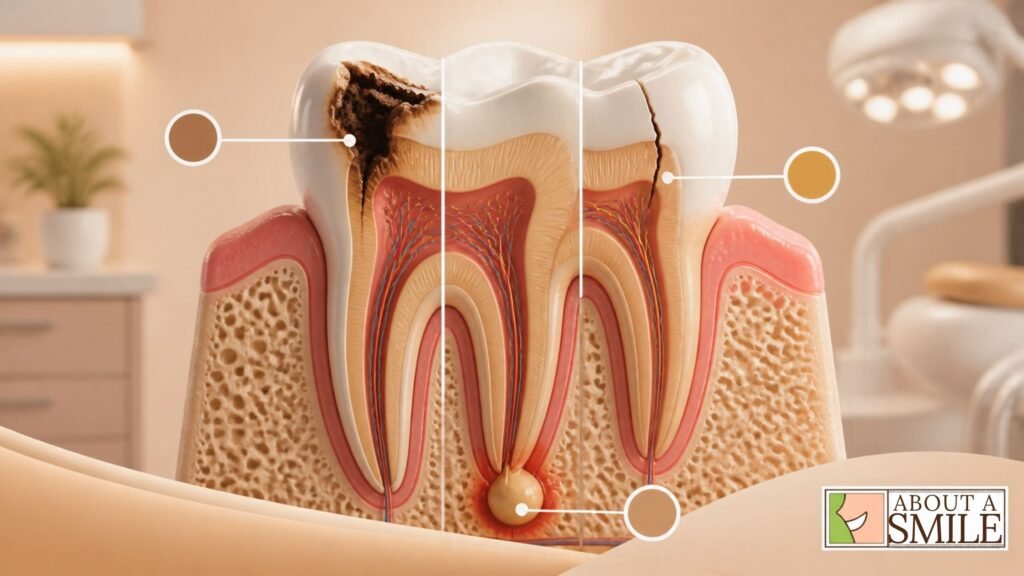
Tooth pain has many possible causes. Here are some of the most common ones.
- Tooth decay: a cavity that has reached deeper layers of the tooth
- Infection or abscess: a pocket of infection near the root or in the gum
- Cracked or broken tooth: damage that exposes the sensitive inner tooth
- Gum disease: infected or inflamed gums around a tooth
- Impacted wisdom teeth: teeth that cannot come in properly
- Teeth grinding: pressure that strains the tooth and jaw
Our blog on tooth pain causes and treatment explains these causes in more detail. If a tooth is cracked, our restorative dentistry page explains repair options. Gum problems and trouble at the back of the mouth need an exam too, and some wisdom tooth problems are handled through oral surgery.
How Does a Dentist Treat a Severe Toothache?
The treatment depends on the cause. First, your dentist will ask about your symptoms and examine the tooth. X-rays may be used to look at the root and the bone around it. After that, the dentist can explain your options.
| Likely Cause | Treatments Your Dentist May Discuss |
|---|---|
| Cavity | Filling or other restoration |
| Infected or damaged nerve | Root canal treatment |
| Cracked or broken tooth | Repair, crown, or other treatment |
| Tooth that cannot be saved | Tooth extraction |
| Gum infection | Gum disease treatment |
| Wisdom tooth problem | Monitoring or wisdom teeth removal |
If the nerve is infected, you may need a root canal treatment. In some cases, a tooth cannot be saved, and tooth extractions may be recommended. Your dentist will recommend a plan after an exam.
Is Your Toothache a Root Canal Problem?
Some signs point to a problem deep inside the tooth. They include lingering pain after hot or cold, throbbing pain, pain when biting, or a darkening tooth. A bump on the gum may also appear. These are called root canal symptoms, but only a dentist can confirm the cause. Therefore, book an exam rather than guessing.
Can a toothache go away on its own? Pain may ease for a short time, but the cause usually stays. A cavity does not heal by itself, and an infection can spread. It is safer to have the tooth checked.
When Should You See an Emergency Dentist in Edmonton?

Call a dentist the same day if you have any of the following:
- Pain that is severe, throbbing, or keeps you awake
- A swollen or tender gum, or a bump on the gum
- A bad taste in your mouth that does not go away
- A cracked, loose, or broken tooth
- Pain when you bite or chew
Our regular office hours are Monday to Thursday, 8:00 to 4:30, and Friday, 8:00 to 2:00. When you call, tell the team how long the pain has lasted and whether you have swelling. That information helps them guide you. If your symptoms are severe outside office hours, use the emergency warning signs above to decide whether to go to the hospital.
How Can You Help Prevent a Severe Toothache?
You cannot prevent every toothache. Still, good habits lower your risk.
- Brush twice a day and floss daily
- Book regular check-ups and teeth cleaning visits
- Treat small cavities before they grow
- Limit sugary snacks and drinks
- Wear a mouthguard for sports
- Do not chew ice or hard objects
Regular visits let your dentist spot small problems early, before they turn into painful ones.
What If Your Child Has a Toothache?
Children can get toothaches too. The first steps are similar: rinse with warm water and call a dentist. Do not give your child any medicine without checking the label or asking a pharmacist or doctor. Our guide on when your child should see a dentist can help you plan visits.
What If Dental Visits Make You Anxious?
Pain and fear often go together. Many people delay care because they feel nervous. However, waiting can let a problem grow. Tell the team about your worries when you call. You can also ask about sedation dentistry if anxiety is a concern.
Why Choose About A Smile for Dental Pain?
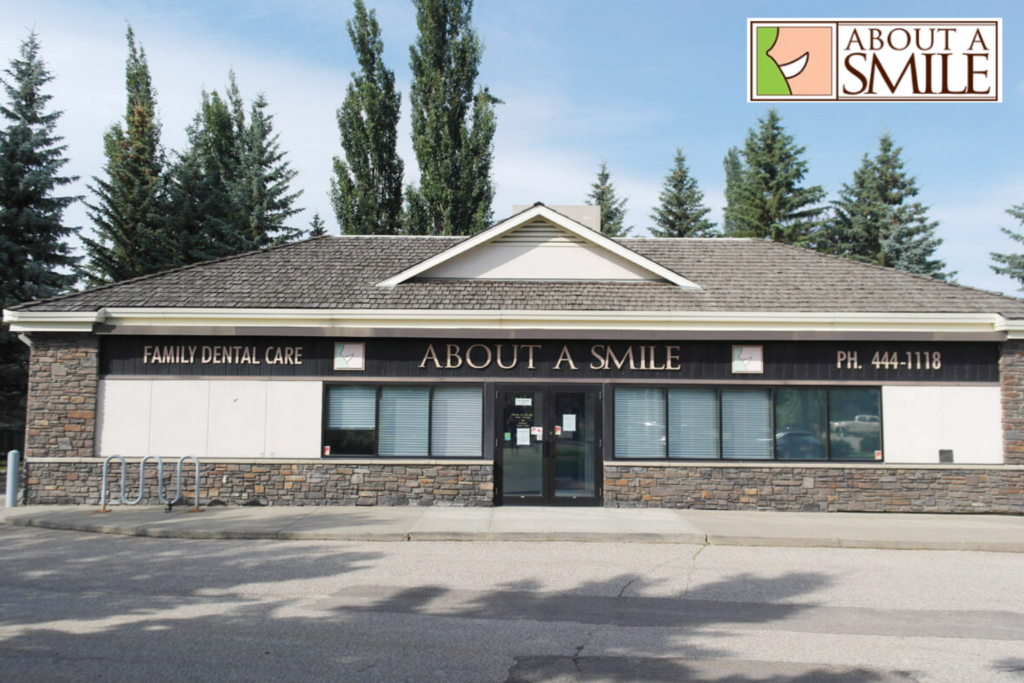
At About A Smile, we care for patients of all ages. As a family dentistry clinic in Edmonton, we can look after your whole family in one place. You can learn more about our team or read our guide on how to choose a dentist in Edmonton. To find our location, hours, and patient reviews, visit our About A Smile Google Business Profile.
Frequently Asked Questions
What should I do first for a severe toothache?
Rinse with warm salt water, floss gently, and use a cold compress on your cheek. Then call a dentist the same day, because home care does not treat the cause.
Can a toothache go away on its own?
The pain may ease for a short time, but the cause usually remains. A cavity or infection needs a dentist to examine it.
When is a toothache an emergency?
Seek emergency care if you have facial swelling, fever, or trouble breathing or swallowing. Severe pain that keeps you awake also needs prompt dental care.
What causes a severe toothache?
Common causes include tooth decay, infection, a cracked tooth, gum disease, and impacted wisdom teeth. A dental exam can find the exact cause.
Will I need a root canal for a toothache?
Not always. A root canal is considered when the nerve inside the tooth is infected or damaged. Your dentist will examine the tooth before recommending any treatment.
Is it safe to wait for a toothache to get better?
It is usually safer to have the tooth checked. Waiting can allow decay or infection to progress.
Toothache? Call Our Edmonton Dental Team
Do not wait for tooth pain to get worse. Call us to describe your symptoms and find out the next step.
Call: 780-444-1118 | Email: aboutasmile183@gmail.com
Hours: Mon–Thu 8:00–4:30 | Fri 8:00–2:00
